
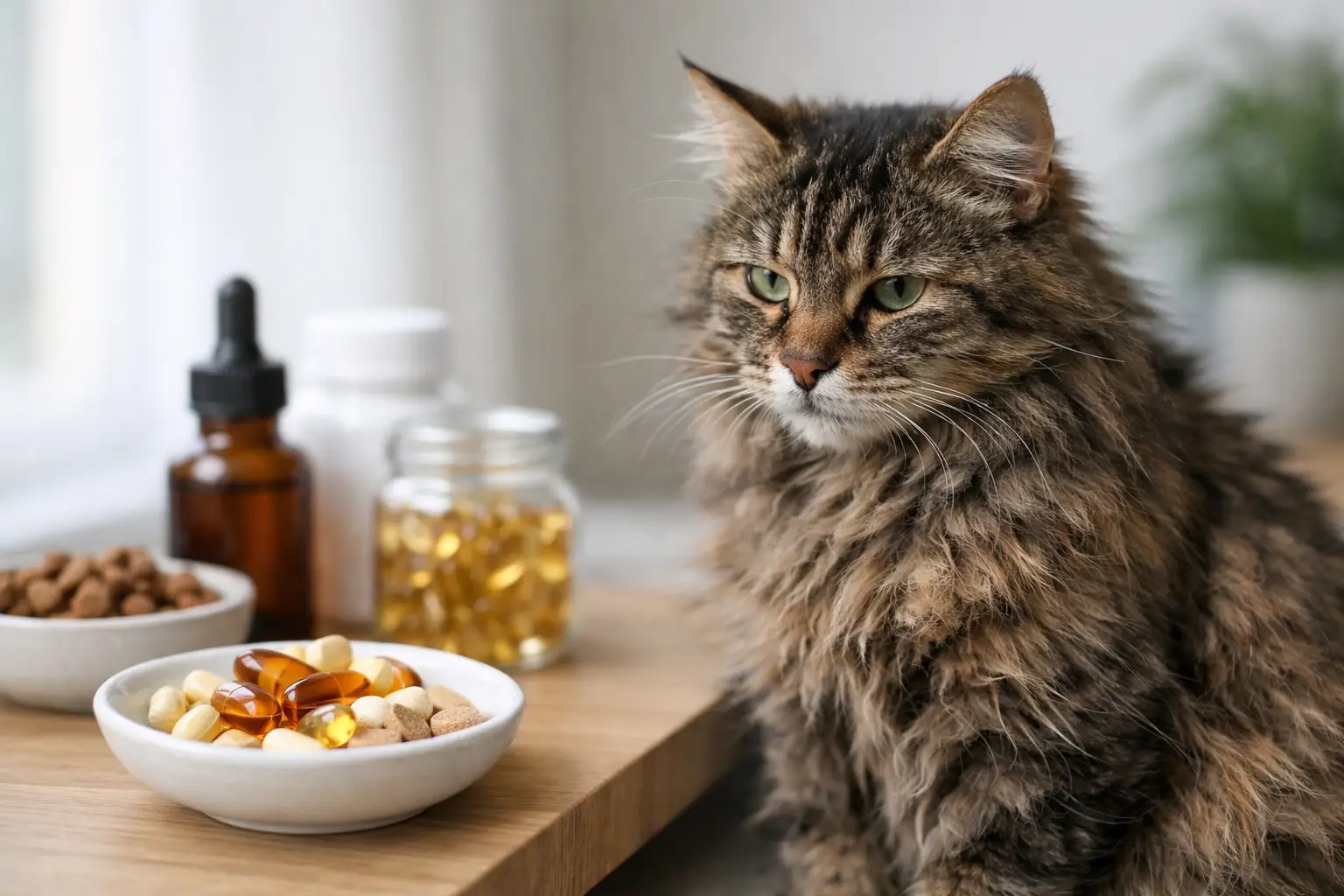
A cat that usually has a soft and shiny coat quickly looks sad when its coat becomes dull, dry or matted. Many cat owners therefore start looking for vitamins for cats with poor coat, but the right solution depends on the cause. The coat is not just a cosmetic issue. It is often an early sign of how the cat is feeling inside.
If your cat sheds more than usual, has a greasy coat, develops dandruff or is no longer grooming itself as before, it is worth reacting early. In some cases, targeted supplements can be a good support. In other cases, poor fur is a signal that the cat is lacking more than vitamins – or that there is illness, pain or stress behind it.
When is a coat “bad”?
A healthy cat's coat is typically smooth, dense and uniform. Long-haired cats may naturally have more volume, but the coat should still feel well-groomed and free of obvious knots, greasy areas or large amounts of dandruff. When the coat changes in character, it is often something the owner notices before the cat shows other symptoms.
This can manifest as a dull surface, increased shedding, dry skin, dandruff or small bare areas. Some cats also develop a more bristly coat, especially across their back. Others stop grooming themselves properly because they are in pain, overweight or have reduced energy. That is why it makes sense to look at the whole cat and not just the coat.
Vitamins for cats with poor fur – what can actually help?
When talking about vitamins for cats with poor fur, it is rarely a single vitamin that solves the problem on its own. Fur and skin depend on a combination of nutrients, fatty acids and a food that the cat can actually absorb and thrive on.
B vitamins plays an important role in the normal function of the skin and the quality of the coat. Biotin is often mentioned because it is associated with skin, coat and claws. Zinc is also central, as it contributes to normal skin and cell renewal. Vitamin A is important for the skin, but the same applies here as with other fat-soluble vitamins – more is not necessarily better. Cats cannot tolerate indiscriminate overdose.
Additionally, many people overlook omega-3 and omega-6 fatty acids because they are not technically vitamins. Yet they are often among the most relevant supplements for dry, dull or flaky fur. If your cat lacks the right fats in their diet, their fur can lose its shine and their skin can become more irritated.
The practical advice is therefore simple: Look for products that are developed for cats and target skin and fur, rather than buying random vitamin products. A cat has different needs than both dogs and humans.
The most common causes of poor coat
Before choosing a supplement, it's important to understand what could be behind it. A bad coat isn't always due to a lack of vitamins.
Food quality is one of the most common explanations. If the cat is fed a food with low nutritional value, insufficient protein content or poor fatty acid composition, it is often seen in the fur first. Cats are obligate carnivores, and their nutrition must be precise. Small compromises in the food can have big effects over time.
Age also plays a role. Older cats often groom themselves less, either because they become stiff in the body, develop dental problems or lose energy. In this case, the fur problem can be an external sign of reduced mobility or the onset of illness. This is particularly relevant for owners who want to maintain their cat's well-being and daily quality of life for as long as possible.
Parasites, allergies and skin irritation are another group of causes. Fleas, mites and hypersensitivity can cause itching, licking and poor coat quality. Here vitamins are of limited help only if the underlying irritation is not treated.
Finally, you should consider illness. Kidney problems, metabolic disorders, chronic pain, and digestive problems can all affect the appearance of the coat. If your cat is also losing weight, drinking more, vomiting, or changing behavior, you shouldn't start with supplements alone.
How to choose the right supplement
The best supplement is one that suits your cat's needs and daily routine. If the problem is primarily dry fur and dandruff, a product with essential fatty acids and skin-supporting vitamins may be a good place to start. If your cat sheds heavily during periods, a broader composition with biotin, zinc and B vitamins may make more sense.
It's also worth considering the form. Some cats accept oil over food, while others are easier to help with tablets, pastes or powders. The best solution is one that you can actually give every day. Continuity means more than pretty labels.
It is best to choose products with clear dosage for cats, clear ingredient statements and a focus on skin and fur rather than general “wellness” promises. For many owners, it is an advantage to buy from a supplier that works purposefully with functional supplements and makes it easy to find solutions according to needs. This saves time and provides greater security in the choice.
What to expect – and when
Fur rarely improves overnight. The skin and hair follicles need time to respond, so it often takes several weeks before you see a real difference. Some cats get their coat shiny more quickly, while others only show improvement after a shedding period is over.
This is also where many people give up too early. If the cat is otherwise thriving, and you have chosen a relevant supplement in the correct dose, it is reasonable to assess the effect over 4 to 8 weeks. At the same time, you should keep an eye on appetite, activity level, weight and grooming. A nicer coat is good, but better well-being is the real goal.
When should you contact the vet?
There are limits to what vitamins for cats with poor fur can do. If your cat develops spots, sores, severe itching, a bad smell from the skin, or obvious pain when touched, it should be examined. The same applies if it seems lethargic, loses weight, or stops eating normally.
Cats often hide discomfort for a long time. That's why a change in the coat is sometimes the first and only clear sign. The sooner you assess the problem, the easier it is often to help the cat get back on track.
Small changes in everyday life can make a big difference
Supplementation works best as part of an overall effort. Provide a good quality complete food, fresh water, a relaxed mealtime routine and a weight the cat can handle. move freely Overweight cats often have a harder time keeping their hindquarters and backs well-groomed, and this is quickly visible in their fur.
Regular brushing can also help, especially with long-haired cats and older cats. It removes loose hair, distributes the skin's natural oils, and makes it easier to spot dandruff, knots, or irritation early. For some cats, it's also a calming routine that reduces stress.
If you use supplements, keep it simple. Don't start three products at once. Then it's hard to know what works and whether the cat tolerates it all well. A targeted solution is almost always better than a kitchen cabinet full of half-used containers.
When the coat reflects the cat's quality of life
A beautiful coat is not just pretty to look at. It often tells you that your cat is getting the nutrition and support it needs. That's why it makes sense to react when the coat loses its shine, becomes dry or looks neglected. It's not about over-indulging, but about maintaining your cat's comfort, mobility and well-being in everyday life.
At Strohmedico, the thinking is simple: Choose solutions according to need, and make it easy to support health before small problems grow bigger. For cat owners, this means that targeted products for skin, fur and well-being can be a practical part of everyday life – especially when chosen carefully.
If your cat has a sad coat, the best next step is not to guess, but to take a sober look at food, age, behavior and possible deficiencies. When the cause becomes clearer, it also becomes much easier to choose the support that actually makes a difference.