

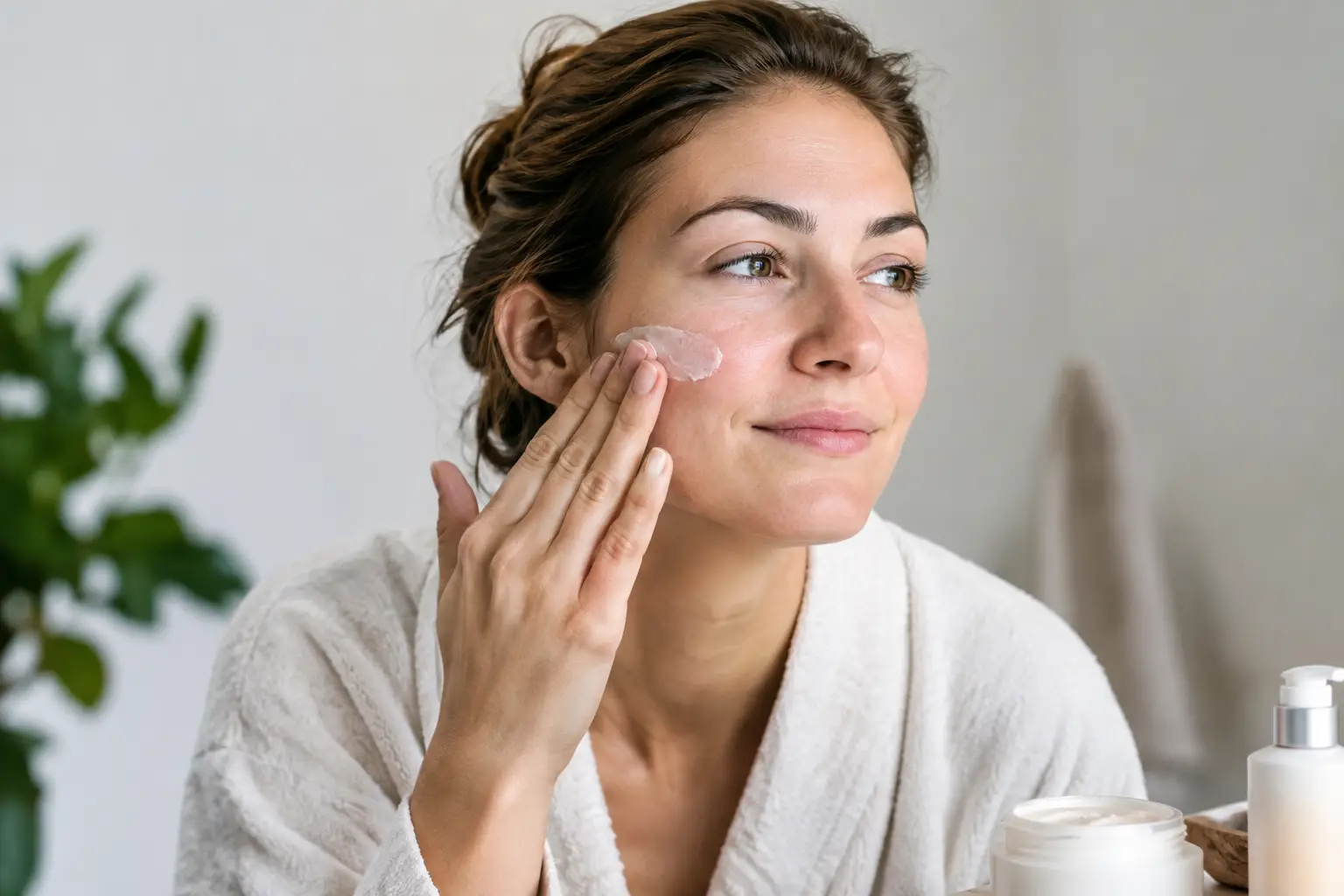
When your skin feels tight after a shower, your lower legs are peeling, or your hands feel rough, it's often the little habits that make the biggest difference. Topical skincare for dry skin isn't about using as many products as possible, but about choosing a simple routine that suits your skin's needs and is easy to stick to.
Dry skin is common and can occur at any age. However, it often becomes more common with age because the skin's natural oil and moisture content can change. Cold, wind, low indoor humidity, hot water and frequent hand washing can also make skin drier. With the right care, you can support your skin's normal barrier and make everyday life more comfortable.
What does topical skin care mean for dry skin?
Topical simply means that the product is applied directly to the skin. It can be a cream, lotion, ointment, balm or oil. The products' job is typically to add moisture, soften the skin's surface and limit how quickly water evaporates from the skin.
The outermost layer of the skin acts as a protective barrier. When the barrier is in balance, the skin retains moisture better and protects against environmental influences. With dry skin, the barrier may not function properly, and the skin may therefore feel tight, rough or flaky. A consistent care routine can help to give the skin better conditions in everyday life.
It is worth distinguishing between dry skin and skin that is persistently red, cracked, very itchy or oozing. In these cases, the skin should be assessed by a doctor or other relevant healthcare professional, especially if the discomfort does not subside with gentle care.
Read more about Strohmedico's shower gel
Choose product according to skin area and needs
There is no one consistency that suits everyone. The choice depends on factors such as where on the body the skin is dry, the season and how much product you actually use. A light lotion is often practical for larger areas such as legs and arms, while a richer cream or ointment may be better suited for very dry hands, elbows, feet and shins.
Facial skin may have different needs than the body. Many people prefer a mild face cream with a consistency that feels comfortable under sunscreen or makeup. For hands, a more concentrated cream may be beneficial because repeated hand washing and cleaning removes the skin's natural oils.
A good rule of thumb is that the product should be comfortable enough for you to use regularly. A very thick ointment may be appropriate at night or on particularly exposed areas, but it may feel too heavy during the day. Conversely, a thin lotion may be easy to spread but require more frequent use when the skin is extra dry.
Ingredients often included in skin care
Many moisturizing products combine several types of ingredients. Humectants like glycerin help attract and retain water in the outermost layer of the skin. Emollient lipids and oils can make the skin more supple, while more protective ingredients lay a light film on the surface and limit moisture loss.
Urea is also included in some products for dry and rough skin. The concentration affects the nature of the product, and some people may experience a stinging sensation if the skin is very irritated or has small cracks. Therefore, try a new product on a small area first, and choose a simple, mild formulation if the skin reacts easily.
Perfume and essential oils are not necessarily a problem for everyone, but can be an unnecessary factor for sensitive or very dry skin. A perfume-free product is often a sensible starting point, especially if you want a fixed routine with few variables.
A simple routine that is easy to implement
The best time to apply cream is often right after a bath or shower, when your skin is still slightly damp. Pat your skin dry with a towel rather than rubbing vigorously, and then apply the product while there is still some moisture left on the skin's surface. This can help lock in moisture.
For most people, one thorough application daily is a good place to start. For dry hands, it may be relevant to use hand cream after washing and before bed. If your feet feel particularly dry, a rich cream in the evening combined with cotton socks can be a practical habit. There is no need to complicate the routine with many steps.
Hot, long baths can feel nice, but they can also dry out your skin. Shorter baths with lukewarm water and a mild cleanser on the areas that need it are often more gentle. Your entire body doesn't necessarily need soap every day. Water alone can be enough for areas that are less prone to sweating.
Adapt your skincare to the season and everyday life
Dry skin is rarely the same year-round. In winter, cold air and heated rooms may make it relevant to choose a more nourishing cream. In summer, a lighter lotion may be more comfortable, especially if you are applying the product to large areas of the body.
If you work with water, cleaning products, soil or frequent hand sanitizers, your hands are often exposed to more. It can help to have a hand cream visible by the sink or on the bedside table. Wearing gloves when washing dishes and cleaning can also reduce direct contact with products that can dry out the skin.
Clothing matters if the skin is sensitive. Soft, breathable materials close to the body are experienced by many as more comfortable than coarse or scratchy textiles. Detergent and fabric softener may also be worth considering if the skin is irritated by clothing.
When you try out a new product
Don't change everything at once. If you introduce several new products at once, it's hard to know what your skin will react to and what it won't. Start with one product and use it consistently for a period of time.
Stop use if skin becomes visibly irritated. irritation, burning, or rash. Topical products are intended for external use and should be used according to the instructions on the packaging. Take special care on skin with cracks, wounds or known skin problems.
Skincare as part of daily self-care
The condition of the skin is influenced by both external care and the environment you provide your body with in your daily life. Fluids, a varied diet, sleep, exercise and protection from cold and strong sun are all parts of a healthy lifestyle. Dietary supplements should not replace a varied diet, and skin care should be seen as a practical supplement to good daily habits.
The most realistic choice is often the best: a gentle cleanser, a cream you like to use, and a fixed place in your routine. When care is simple, it is more likely to stick through changing seasons and busy days.
About Strohmedico Strohmedico is a European webshop focusing on dietary supplements produced in the EU. We write about ingredients, nutrition and products that can be part of a healthy and active lifestyle.