

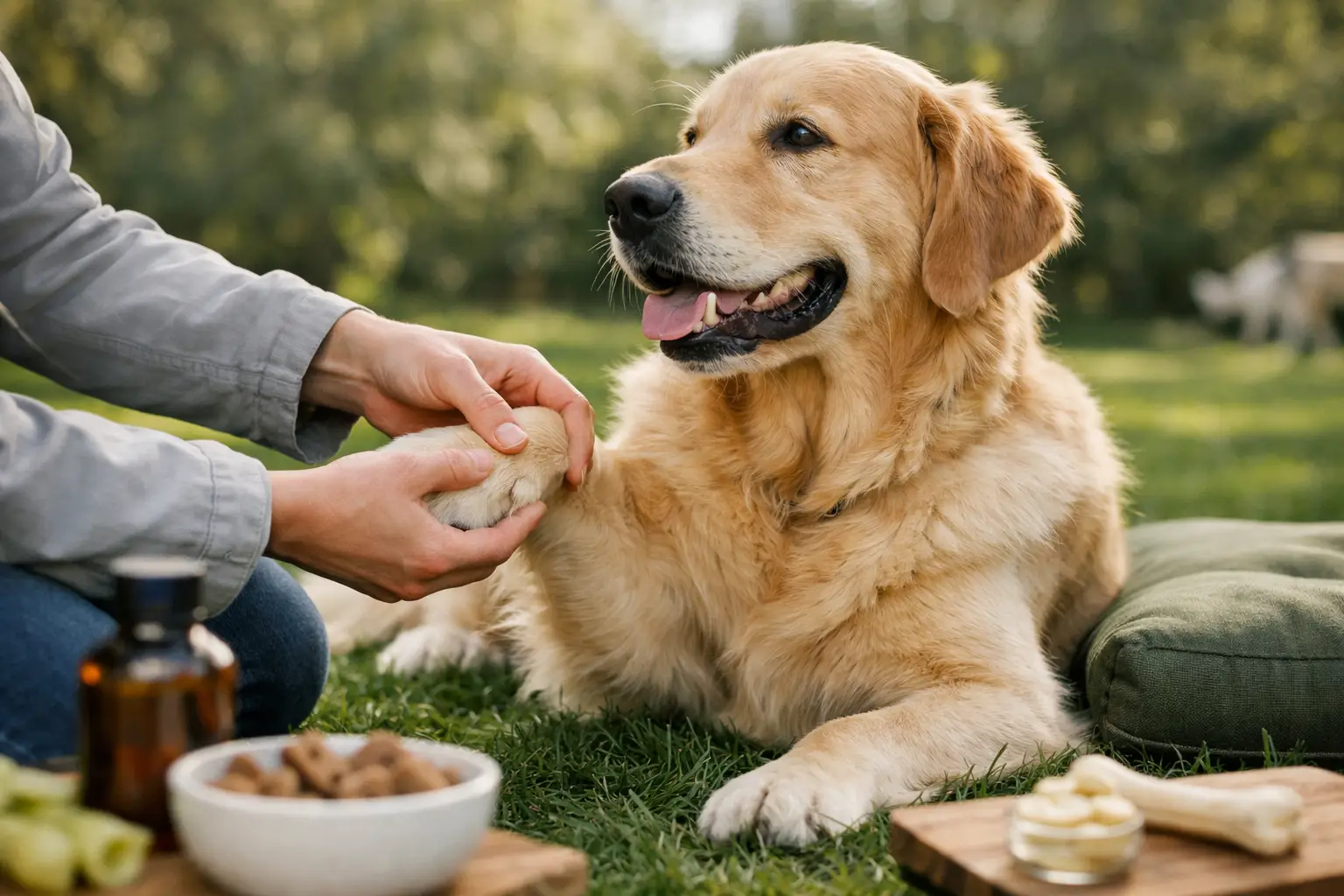
When a dog starts to get up a little slower, hesitates on the stairs or no longer jumps up like before, it's rarely just age. Often it's the body's way of showing that the joints need support. If you want to know how to best work on how to support your dog's joints, it's not about one quick fix, but about a wise daily effort that can maintain mobility, energy and joy of life for many years.
How to support your dog's joints from the start
Joint health is often the first thing you think about when your dog shows signs of stiffness. But the earlier you support the body, the better the chances are of keeping your dog active for longer. This is especially true for larger breeds, overweight dogs, very active dogs and older dogs, but younger dogs can also benefit from preventative support.
The joints are stressed every single day. Every walk, every game and every braking puts demands on the cartilage, tendons and muscles. When the body is functioning well, you hardly notice it. When it is not, it becomes evident in the dog's movement, mood and desire for activity.
The good thing is that you as the owner can do a lot. The strongest efforts typically come from a combination of weight control, appropriate exercise, good recovery and targeted supplementation.
Weight matters more than most people think
If there's one area that can quickly change the strain on a dog's joints, it's weight. Even a few extra pounds can put more strain on the knees, hips, and elbows than many people realize. A dog doesn't have to be very overweight for it to show in their movement patterns.
Many owners associate a little extra bulk with well-being, but it is rarely an advantage for the joints. A slim, well-muscled dog is much better able to move freely and without unnecessary strain. Therefore, it is a good idea to regularly assess the dog's condition and adjust food, treats and activity level as needed.
This doesn't mean your dog needs to go on a strict diet. On the contrary, small, steady adjustments work best. Fewer calories, more control over snacks, and a firm eye on portion sizes can make a real difference over time.
The right exercise strengthens – the wrong one strains
Exercise is essential, but it's the type of exercise that makes the difference. Many people believe that a dog with incipient joint problems should be spared as much as possible. This can actually make the situation worse because the muscles around the joints lose strength and stability.
The most gentle is usually regular, moderate movement. Several short walks are often better than one long, hard ride. A steady pace on soft ground is typically more joint-friendly than wild sprints, slippery floors, and repeated jumping in and out of cars or couches.
For some dogs, swimming or controlled water exercise makes sense because the body works without the same impact on the joints. For others, adjusting daily activities to be more stable and less explosive is enough. It depends on the dog's age, breed, weight and whether they are already showing signs of discomfort.
Signs that your dog's joints need help
Joint challenges don't always come on dramatically. They often sneak up on you with small changes that the owner only associates with pain or stiffness later. The dog may become less interested in long walks, take longer to get up from rest, or seem more cautious during play.
Some dogs lick more in a certain area, others change their temperament and become more reserved. You may also see a slight limp, a stiff gait after sleep, or a reluctance to climb stairs and jump. Symptoms are often more pronounced in the morning or in cold weather.
If the changes persist, the dog should be evaluated by a professional. This is especially true in the event of sudden lameness, obvious pain, or significant changes in behavior. Supplements and support in everyday life are valuable, but they should not be used alone if the dog needs an examination.
Dietary supplements as joint support – what makes sense?
When it comes to supporting your dog's joints, supplements quickly come to mind. And for good reason. The right ingredients can be a practical and effective part of an overall effort, especially if your dog is older, active, heavy, or already showing signs of stiffness.
glucosamine is among the most well-known ingredients for joints. It is often used to support cartilage and normal joint function. MSM is also often included in mobility products and is chosen by many dog owners who want broad support for joints and connective tissue. In addition, you often see combinations with chondroitin, vitamins and minerals, which together aim to support the dog's mobility in everyday life.
The key is not just to buy the first and best. Look for products with clear dosage, transparent content and a quality you can trust. Here, production, raw material quality and everyday usability mean more than fancy words on the packaging. At Strohmedico, the focus is precisely on functional solutions, which makes it easier to support mobility and quality of life in a targeted manner.
It is also worth being realistic. Some dogs respond quickly to joint supplements, while others only show a difference after several weeks. The effect depends on the dog's starting point, age, weight and how consistently the supplement is given.
Everyday life around the dog makes a big difference
Joint support is not just about exercise and supplements. Small changes in the home can significantly reduce the load. Slippery floors are a classic challenge because the dog tenses up and slides during starts and turns. Rugs or non-slip runners can therefore be a simple help.
A good resting place is also important. If the dog is lying down cold or hard, the body may feel more stiff after breaks. A supportive bed placed in a warm place can make it easier for the dog to recover. If you have a dog that often needs to get in and out of the car, a ramp can be a sensible solution rather than repeated jumps.
It may sound like a small thing, but for a dog with stressed joints, the sum of everyday movements can have a big impact. The less unnecessary stress, the better the chances of maintaining good function.
Older dogs don't require less life – but smarter support
Many owners become cautious as their dog ages. It's understandable, but it's rarely the best solution to just cut everything out. A senior dog still needs movement, stimulation, and a body that's kept moving.
The difference is that the effort needs to be more targeted. Shorter walks, better warm-ups, more recovery and possibly daily joint support can be what keeps the dog happy and mobile. Here it is not about pushing, but about maintaining strength and freedom of movement.
It is often precisely in mature age that consistent effort provides the greatest value. Not because you can stop the passage of time, but because you can do a lot to support the dog's comfort in the everyday life it lives.
When should you respond sooner rather than later?
There are situations where simply adjusting diet and activity is not enough. If the dog suddenly becomes lame, whines when moving, seems very sore or completely avoids supporting a leg, it should be taken seriously. The same applies if the symptoms come back again and again, or if the dog clearly loses its joy in life.
Some problems are due to normal wear and tear, while others may be injuries or conditions that require further assessment. Therefore, it is a strength to react early. The sooner you take the signs seriously, the better the chance of supporting the dog properly.
The best strategy is the one you can stick to.
There is no one-size-fits-all solution for all dogs. A large senior dog with incipient stiffness has different needs than a young, active dog of a smaller breed. But the principle is the same: support the joints before problems develop, and do it in a way that lasts throughout everyday life.
When weight is under control, exercise is adjusted, the home is cleverly arranged, and the dog receives targeted support, you give it much better conditions for an active life. It's not just a question of fewer inconveniences. It's about the freedom to go for walks, get up without difficulty, and maintain the desire to be a dog.
The best help is rarely dramatic. It lies in the choices you make every day – and in your willingness to act before small signs turn into big limitations.