
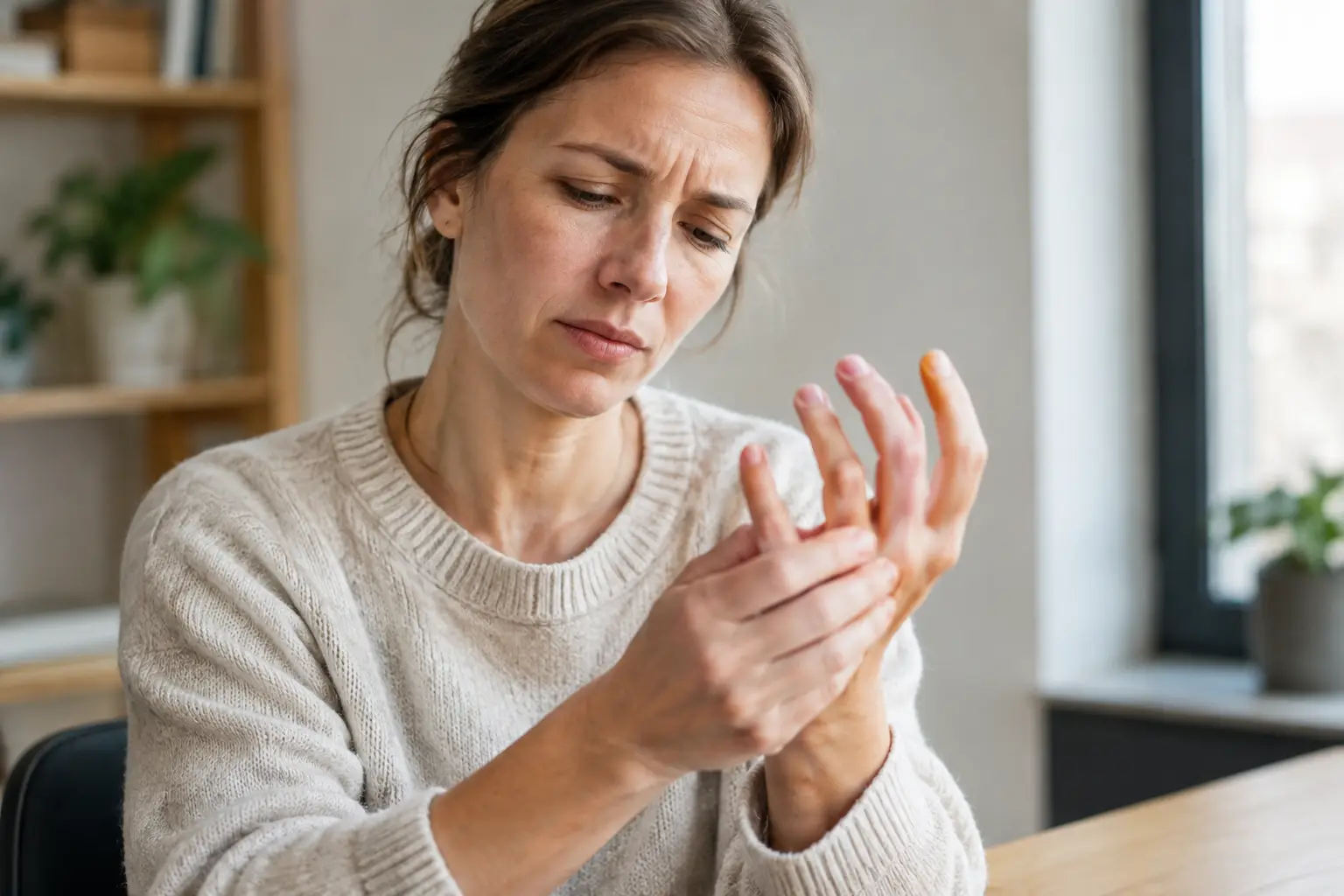
When the glass lid tightens, the keyboard feels heavy, or your fingers are hard to get going in the morning, sore joints in your fingers can take a surprising toll on your everyday life. Your hands are used all the time – for cooking, working, gardening, exercising, and the small practical tasks that make it possible to live independently. That's why it makes sense to look at both strain, habits, and the body's general needs.
Tenderness in the joints of the fingers is common and can have many explanations. It is not always possible to pinpoint one cause, and the same advice does not necessarily apply to everyone. In the case of persistent or obvious discomfort, it is best to get a professional assessment rather than guessing yourself.
Why do the joints in the fingers become sore?
The fingers consist of small joints, tendons, muscles and connective tissue that work closely together. Repetitive movements can be felt, especially if the hands are used unilaterally or with great force over a long period of time. This can be, for example, working with a mouse, mobile phone, tools, knitting needles or heavy lifting.
Age can also play a role. The body's tissues change naturally throughout life, and some people find that their joints feel less flexible after rest or on cold days. Previous injuries to the hand or finger, strain from sports, and individual circumstances can also play a role.
Some people experience soreness after a single unusually active day, while others have discomfort that comes and goes over a longer period of time. The key is not only how sore it feels here and now, but also whether it progresses, limits everyday life, or is accompanied by other signs.
Morning stiffness, swelling, or decreased grip
Notice the pattern. Are your fingers stiffest in the morning? Do they get tired at the end of the day? Is there swelling, warmth, redness, numbness, or a sudden loss of grip? Such observations can make it easier to describe the situation to your doctor or physical therapist.
Consult a doctor if a joint is significantly swollen, warm or red, if you have severe pain after an injury, or if your fingers suddenly cannot move normally. The same applies if the soreness persists for several weeks, increases or affects sleep, work and normal activities. Dietary supplements and everyday habits cannot replace a professional assessment for persistent symptoms.
Give your hands a better framework in everyday life
Small adjustments may be more realistic than trying to change everything at once. If a particular activity triggers soreness, it may help to break up the task, vary your grip, or take short breaks. When working on a computer, a calm hand position, appropriate desk height, and switching between tasks can reduce unilateral strain.
Movement is still relevant, even when your fingers feel stiff. Calm movements such as opening and closing your hand, spreading your fingers and gently moving your wrist can be part of the natural breaks of the day. It should feel controlled and adapted to your daily routine. If movements clearly worsen the discomfort, you should stop and seek advice.
Heat or cold is experienced differently. Some people prefer warm hands in cold weather, while others find a short cool compress after exertion feels comfortable. There is no one-size-fits-all solution. Choose the approach that feels comfortable, and avoid very high or low temperatures directly on the skin.
It can also be practical to think about grips. Kitchen utensils, garden tools and tools with thicker handles may be easier for some people to hold. Use both hands when lifting heavy objects, and avoid squeezing a small finger joint unnecessarily when a larger muscle group can help.
Diet, bones and normal muscle function
The daily life of the joint is connected to the rest of the body. A varied diet with sufficient protein, vegetables, whole grains, healthy fats and fluids forms a sensible basis for an active lifestyle. At the same time, the normal function of the muscles is important for how the hands and arms are used in daily movements.
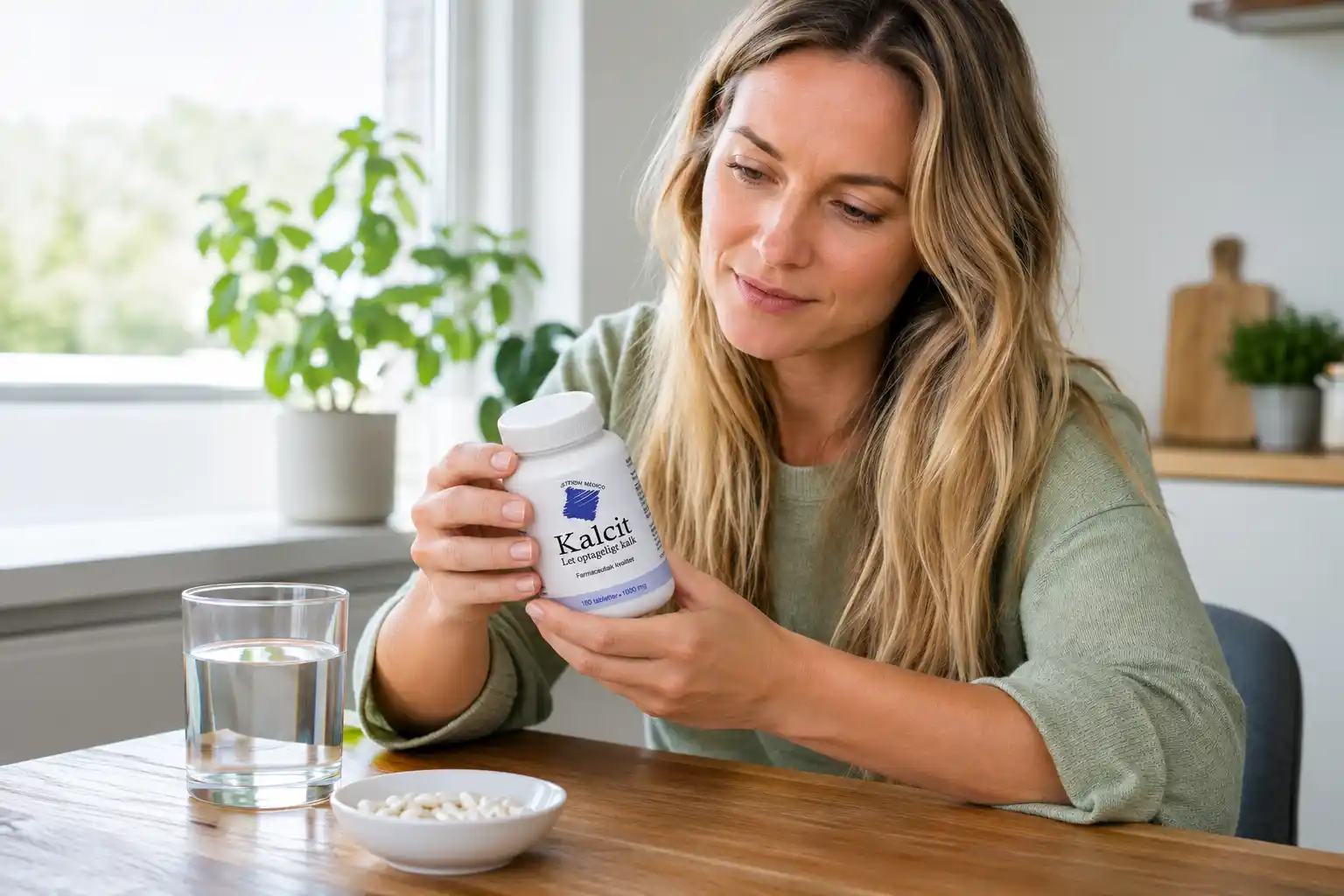
Several nutrients have approved functions that may be relevant to know. Vitamin D contributes to maintaining normal bone function and normal muscle function. Calcium contributes to maintain normal bones and to normal muscle function. Magnesium contributes, among other things, to normal muscle function and to reducing tiredness and fatigue.
The need for supplements depends on the overall diet, age, lifestyle and any special conditions. In Denmark, vitamin D may be relevant for people who get limited sunlight, but the right solution is individual. Always follow the product's recommended daily dose, and talk to a doctor or pharmacist if you are taking medication, are pregnant or breastfeeding, or are in doubt about what is right for you.
What about glucosamine and MSM?
Glucosamine and MSM are ingredients that many people are familiar with from products aimed at mobility and an active everyday life. They can be part of a personal routine, but supplements should be chosen with realistic expectations. The response may be experienced differently from person to person, and a supplement should not be used as a substitute for a varied diet, exercise or examination for persistent complaints.
Read the ingredient list carefully, especially if you have allergies or follow a specific diet. For products with glucosamine, it is particularly relevant to pay attention to the source of the raw material. Quality, clear dosage and EU production can be good practical criteria when comparing products.
When a simple routine is easier to keep
The most helpful thing is often a routine that fits into your daily life. This could be a few minutes of hand movement in the morning, taking a break between repetitive tasks, and focusing on regular meals. If you choose a dietary supplement, it may be easier to take it at the same time each day, such as with a meal, if the product's instructions allow it.
Keep a simple note for a week or two: When are your fingers most sore, what activities come first, and what feels helpful? This provides a more concrete starting point for your own adjustments and for a conversation with a professional. The goal doesn't have to be to make every day the same, but to create a better framework for the things you would like to be able to continue doing.
About Strohmedico Strohmedico is a European webshop focusing on dietary supplements produced in the EU. We write about ingredients, nutrition and products that can be part of a healthy and active lifestyle.