
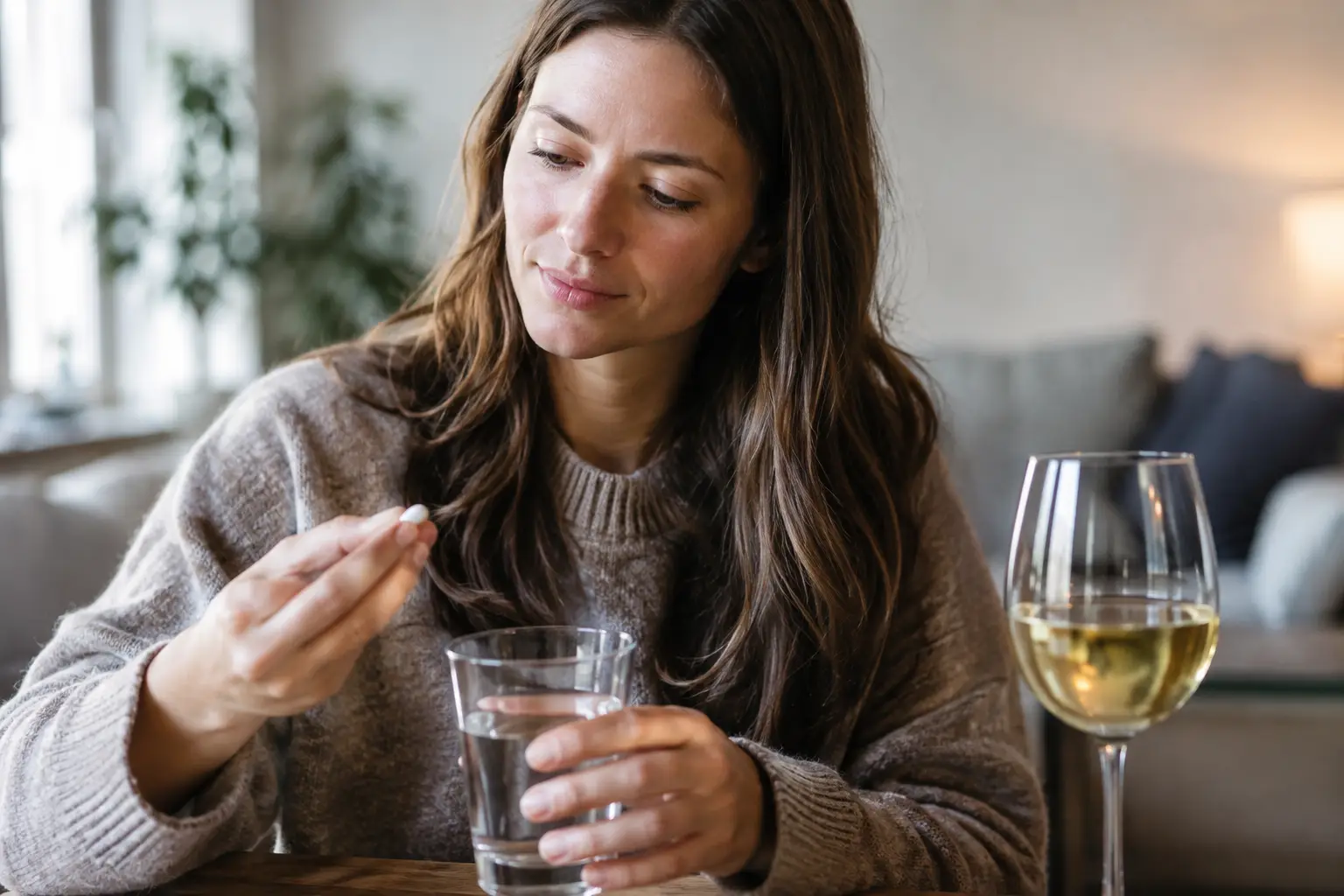
A glass of wine with dinner can feel like a natural part of the evening, especially if you also want to relax. But Melatonin and alcohol – can they be combined? The short, cautious answer is that it's generally best not to take melatonin and alcohol on the same night. The combination can make you more drowsy and affect your reaction time, balance, and sleep quality in ways that are difficult to predict.
For adults who want a more stable evening routine, it is therefore worth distinguishing between what makes you sleepy here and now and what supports a regular circadian rhythm. Alcohol and melatonin affect the body differently, and they are not a shortcut to a better night's sleep when used together.
Short answer: Avoid taking them together
Alcohol can increase the sedative effect that some people experience with melatonin. This can mean increased fatigue, dizziness, poor coordination or a heavy feeling the next day. Some people may also find that their sleep becomes more restless, even though they fall asleep more quickly.
There is no one-size-fits-all rule. The reaction depends on factors such as the amount of alcohol consumed, the time of day, age, body weight, liver function, other medications, and the specific dose of melatonin. Precisely because there are large differences from person to person, the simplest and most prudent solution is to keep alcohol and melatonin separate.
Melatonin is typically used as a medicine in Denmark. Therefore, always follow the instructions on the package and the guidance you have received from your doctor or pharmacist. If you are in doubt about what applies to your product, individual advice is the safest way.
Why alcohol can disrupt a night's sleep
Alcohol can relax the body in the early evening. This is one of the reasons why many people find it easier to fall asleep after drinking alcohol. However, the effect does not necessarily last all night. As the body breaks down the alcohol, sleep can become lighter and more interrupted, and some people wake up earlier than usual.
It can also mean that you feel less refreshed the next morning, even after many hours in bed. Sleep is not just about the number of hours, but also about rhythm and consistency. If you often use alcohol as part of your bedtime routine, it can make it more difficult to assess what is actually affecting your sleep.
Melatonin is a hormone that the body produces as part of the regulation of the circadian rhythm. It is not the same as a regular sedative. Therefore, it is not advisable to combine melatonin with something that can affect alertness, judgment, and sleep patterns.
Melatonin and Alcohol: Timing Doesn't Always Make the Combination Safe
It may be tempting to think that a few hours of separation will solve the problem. However, alcohol can remain in the body longer than you feel obvious intoxication. At the same time, the effect of melatonin and individual sensitivity can vary.
A small glass of alcohol early in the evening is not necessarily the same as several drinks late in the evening. However, it is difficult to specify a safe time interval that applies to everyone. If you have drunk alcohol, it is wise not to take melatonin that same evening unless you have received specific instructions from your doctor or pharmacist.
Also be aware that alcohol can impair your ability to make informed decisions. You may find it easier to take more than you planned or forget when you last took a product. A consistent and simple routine without mixing alcohol and melatonin makes it easier to stay on track.
When should you be especially careful?
Some situations require extra care. This applies, for example, if you are taking medication that can make you tired or affect the central nervous system. For example, this could be certain medications for anxiety, pain, allergies or mental disorders. Alcohol can also affect the effects of several types of medication in other ways.
Talk to your doctor or pharmacist before considering melatonin if you have a chronic illness, liver impairment, or have previously had a severe reaction to alcohol or sleep-related products. Pregnant and breastfeeding women should also seek professional advice.
For older adults, the combination can be particularly unhelpful because drowsiness and poor balance can increase the risk of falls at night. If you get up to use the bathroom or have to climb stairs, even mild dizziness can be a practical risk worth taking seriously.
You should also not drive, cycle in traffic, use machinery or perform tasks that require full attention if you have drunk alcohol and taken melatonin at the same time. The feeling of being alert is not always the same as having normal reaction time.
If the evening has already offered alcohol
If you have been drinking alcohol and are considering melatonin later, the prudent decision is to skip melatonin that evening. Instead, you can help your body with calm, simple settings: drink water, avoid more alcohol, dim the lights, and give yourself the opportunity to sleep without forcing a specific solution.
Avoid compensating the next day by changing the dose on your own. A restless night can be frustrating, but it is often better to return to your usual routine the following evening. If you often feel the need for both alcohol and melatonin to get through the evening, it is relevant to discuss your habits with your doctor or pharmacist.
A calmer evening routine without alcohol
For many adults, sleep becomes easier to manage when evening cues are recognizable. Try to keep bedtime and wake-up times roughly the same, even on weekends. Dim screens and bright lights in the last hour before bed, and avoid large meals or caffeine late in the day if you know they affect you.
Having a consistent transition from activity to rest can also make a difference. A short walk, a warm bath, quiet reading, or preparing for the next day can be more predictable habits than a glass of alcohol. The goal is not a perfect night, but a routine that the body can recognize.
If you uses melatonin following the recommendation of a doctor or pharmacist, it may be advantageous to take it in the same way and at the same time as directed. This will make it easier to see how your body reacts, without alcohol obscuring the picture.
Three questions many people ask
Can a single glass of alcohol and melatonin work?
Even a small amount of alcohol can affect some people more than others. Therefore, it is not possible to promise that the combination is problem-free. The prudent recommendation is to avoid taking them together and seek specific advice if you are unsure.
Does alcohol make melatonin more effective?
No, alcohol should not be used to enhance or supplement melatonin. While alcohol can make you tired, it can also make your sleep less consistent and increase the risk of unwanted drowsiness or dizziness.
What if I wake up in the middle of the night after drinking alcohol?
Do not take extra melatonin without professional guidance. Instead, create a quiet environment, avoid bright light, and accept that any one night may be different. If awakenings or fatigue during the day becomes a recurring pattern, you should talk to a doctor.
The most helpful thing is often to choose one clear path for the evening: either alcohol on a special occasion or a fixed routine where melatonin is used as directed. This gives the body more peace and you a better basis for assessing what fits into your everyday life.
About Strohmedico
Strohmedico is a European webshop focusing on dietary supplements produced in the EU. We write about ingredients, nutrition and products that can be part of a healthy and active lifestyle.