

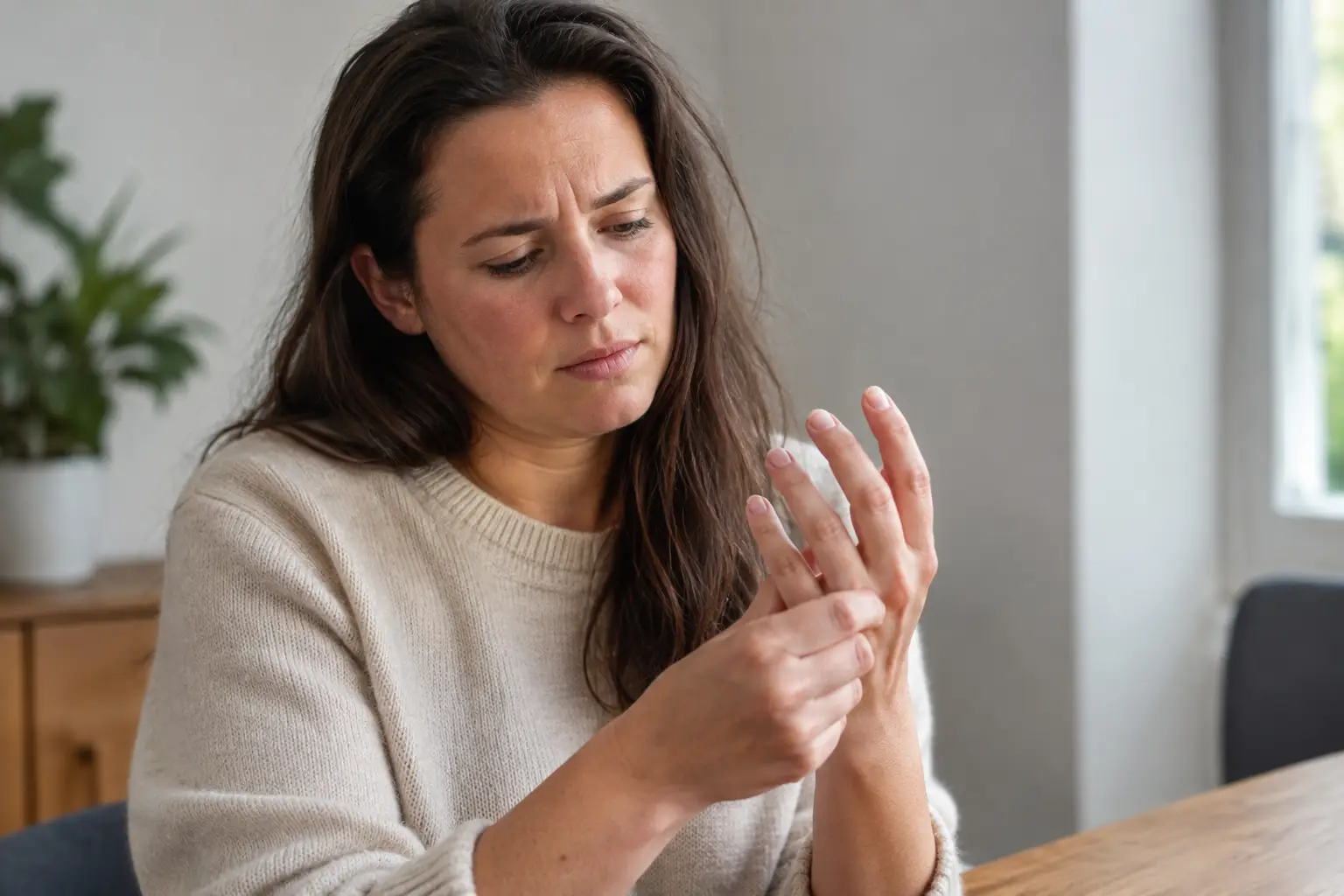
A stiff finger that makes it difficult to open a glass, type on the phone or button a shirt can quickly take up more space than you expect. If you ask yourself: Why do my finger joints hurt?, the answer is not always the same. Strain, age, irritation in tendons and joints, previous injuries and certain diseases can all play a role.
The key is where the pain is, when it comes, and whether it is accompanied by swelling, warmth, or reduced mobility. Hands are used all day long, so small changes are often clearly noticeable in everyday life.
Why do my finger joints hurt?
Finger joints consist of bones, articular cartilage, joint capsule, ligaments, tendons and muscles, which must work closely together. Pain can therefore come from the joint itself, but also from the tissue around it. Some experience discomfort after a long day of repetitive movements, while others wake up with stiff fingers.
Repetitive strain in everyday life and work
Many similar movements can irritate the hands and fingers. This can be, for example, computer work, using a mouse and mobile phone, crafts, gardening, cleaning, music or training with a hard grip. Strain does not necessarily mean that an injury has occurred, but the hands may need variety and breaks.
Pay attention to whether the discomfort occurs after certain activities. If your fingers feel better on days off or after fewer repetitions, this can be a useful clue. A more neutral grip, better posture, and short breaks can make it easier to distribute the load throughout the day.
Age changes and wear and tear in the joints
With age, changes can occur in the cartilage and bones of the joints. This is often seen in the outermost finger joints, the middle joints or at the base of the thumb. Some people notice tenderness when straining, stiffness after rest or knots around the joints. The course varies greatly from person to person.
This is not a sign that the hands should be kept completely still. On the contrary, most people benefit from using them within a comfortable framework. Gentle movement, practical aids and a better distribution of heavy tasks may be more realistic than avoiding activity altogether.
Injury, sprain or overstretching
A fall, a blow to the hand, or a twisted finger can cause pain that lasts longer than expected. An old injury can also make a joint more sensitive later on. If the finger is crooked, significantly swollen, blue, or difficult to move after an injury, it should be evaluated quickly.
The same applies if you can't bend or straighten your finger normally. It can be difficult to determine for yourself whether it's a minor sprain or something that requires treatment.
Inflammatory conditions and other diseases
Some types of joint disease can cause persistent swelling, warmth, and morning stiffness, especially if multiple joints in both hands are affected. Other conditions can cause sudden, severe attacks in a single joint. Infection, skin diseases, and metabolic conditions can also affect the joints in some cases.
You should not diagnose yourself based on symptoms alone. If the symptoms persist, change in nature, or affect your function, it is wise to talk to your doctor. An early assessment can clarify the cause and make it easier to choose the right treatment.
The pattern of symptoms tells something
It can help to be specific before contacting a doctor or physiotherapist. Is the pain worst in the morning, after work or at night? Is one finger joint affected, or does it affect both hands? And is there a difference between pain with movement and pain at rest?
Morning stiffness that eases after a little movement is seen in several different conditions and should be assessed together with the rest of the symptom picture. Pain that occurs especially after many repetitions more often points to strain. However, these are only rules of thumb - causes can overlap.
A simple note on your phone for a week or two can be helpful. Write down which fingers are affected, what you were doing before, how long the stiffness lasts, and whether there is any swelling. This gives a more accurate basis than having to remember everything at a consultation.
When should you seek medical attention?
Urgent assessment is appropriate if a joint becomes red, warm and very swollen, especially if you also have a fever or feel ill. This also applies to injuries with visible malposition, sensory disturbances, discoloration or sudden loss of mobility.
Make an appointment with your doctor if the pain persists for several weeks, recurs frequently, or limits your ability to do everyday things like cooking, dressing, and working. Persistent morning stiffness, swelling in multiple joints, or pain in both hands are also good reasons to get it checked out. It's better to get a clear answer than to continue compensating in silence.
Small adjustments that can relieve strain on your hands
When your hands are irritated, the solution is rarely to push through or avoid using them altogether. A more sustainable approach is to adjust the situations where your joints are most stressed. Divide heavy lifting between both hands, use your whole hand rather than a stiff pincer grip, and choose tools with a grip that fits comfortably in your hand.
When working at a screen, the position of the mouse, the height of the keyboard and frequent changes of position can be important. For practical tasks, a jar opener, thicker handles or a light electric whisk can save effort. Using assistive devices is not laziness – it is a way to preserve energy for the things you want to be able to do.
Gentle movement may also be relevant. Try slowly clenching and unclenching your hand without provoking pain, or spreading your fingers and bringing them together again. In case of obvious pain, swelling or after injury, exercises should be adapted by a professional rather than being forced through.
Diet, bones and joints as part of the whole
A sore finger joint is not explained by a single nutrient, and supplements cannot replace a medical evaluation for persistent symptoms. Still, it may make sense to look at the basic habits that support the body's normal function: a varied diet, sufficient protein, regular exercise, sleep, and a stable daily routine with room for recovery.
Vitamin C contributes to normal collagen formation, which is important for the normal function of cartilage and bones. Vitamin D contributes to normal muscle function and to maintenance of normal bones, while calcium contributes to the maintenance of normal bones. Which supplement is appropriate depends on your diet, age, life stage and any recommendations from healthcare professionals.
Products with, for example, glucosamine and MSM is part of many adults' routines with a focus on mobility. Always read the product's recommended daily dose and ingredient list, and do not expect a dietary supplement to replace examinations, relevant treatment, or healthy everyday habits. Dietary supplements should not replace a varied diet.
If you have a chronic illness, are taking regular medication, or are unsure about the combination of products, you should ask your doctor or pharmacist before starting a new supplement. This is especially true if you are taking blood-thinning medication or several products at the same time.
See Glucosamine and MSM lifestyle package
Give your hands attention in time
Finger joints do a lot of the work we rarely think about until our grip fails or our movements become sore. That's why it's worth responding to a pattern, not just the one bad day. Get persistent or worrisome symptoms assessed, and adjust the small stresses that you can actually change. It can be a practical investment in maintaining the freedom to do the many tasks of everyday life.
About Strohmedico
Strohmedico is a European webshop focusing on dietary supplements produced in the EU. We write about ingredients, nutrition and products that can be part of a healthy and active lifestyle.