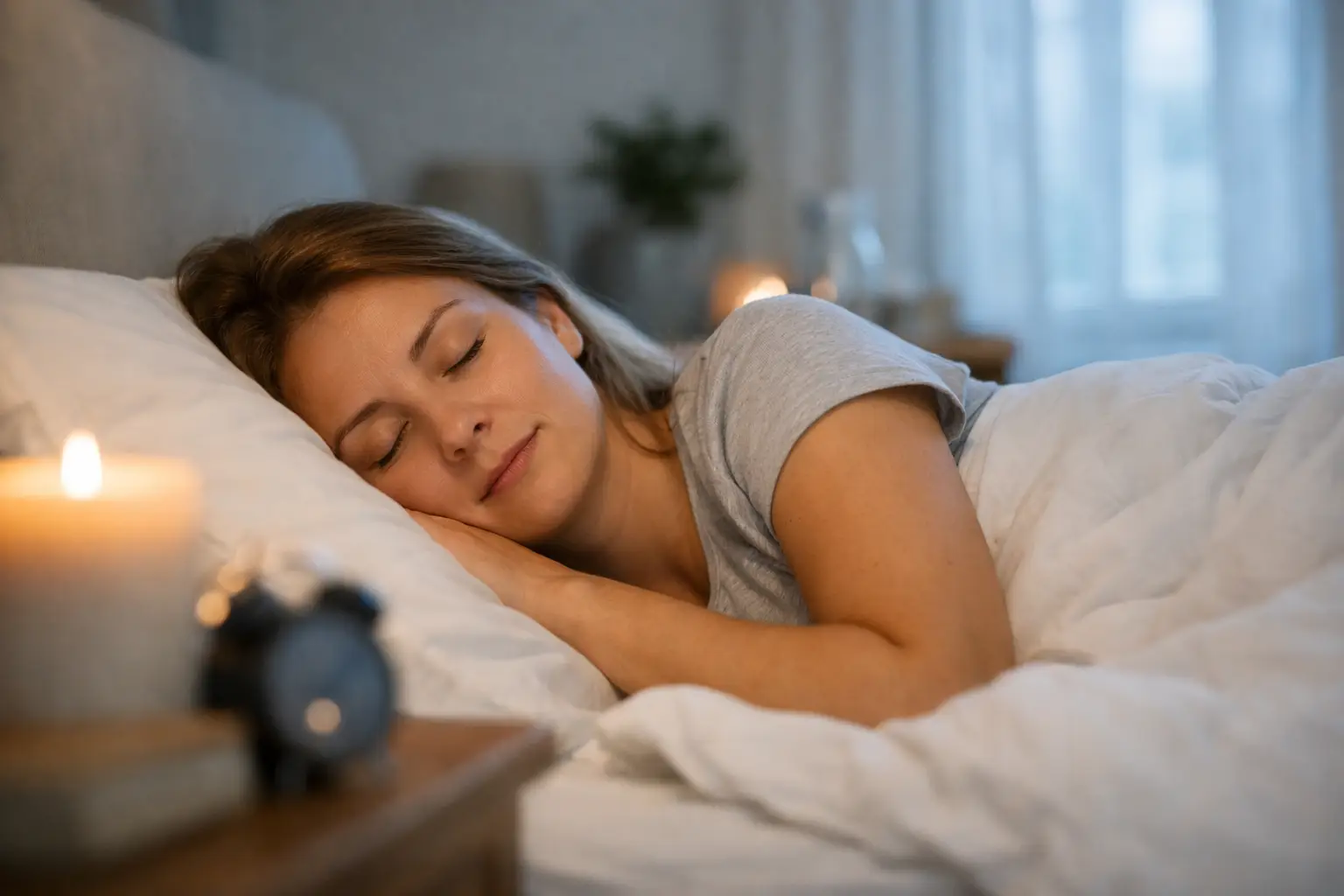
When you wake up several times, lie down for a long time and turn or feel tired from the morning, it is natural to ask: What helps with restless sleep? Often it is not one single thing, but the sum of habits, light, activity, worries and the time of the last meal of the day. Small, consistent changes can make the evening more restful and create a better framework for the body's natural sleep rhythm.
Restless sleep is common, especially as daily life changes with age, work pressure, family obligations or less physical activity. The goal doesn't have to be a perfect night every night. It's more realistic to create a routine that gives your body clear signals about when to be active and when to calm down.
What helps against restless sleep in practice?
The most effective starting point is regularity. It is best to get up at about the same time every day, even on weekends. A fixed time in the morning helps the body's internal clock more than many people think, and often makes it easier to get sleepy at an appropriate time in the evening.
At the same time, the bed should be associated with sleep and rest. If you often lie awake and go through the day's tasks, it may be better to get up briefly, sit in dim light and do something quiet until the fatigue returns. This could be reading a few pages in a book or listening to quiet music. Work, news and bills are best left somewhere other than the bedroom.
Daylight early in the day makes a difference
The body uses light to regulate its circadian rhythm. That's why a walk outside in the morning or early afternoon can be a simple habit with great impact. Even 15-30 minutes in daylight can be a good part of a stable everyday life, even when the sky is cloudy.
In the evening, the opposite principle applies. Bright light from lamps, televisions and phones can make it harder to feel natural fatigue. This does not mean that all screens should be banned, but it often helps to turn down the brightness and choose calmer content in the last hour before bed. A regular evening routine can be a warm bath, light stretching, a book or a cup of decaffeinated tea.
See Strohmedico's 3D sleep mask
Movement during the day, rest close to bedtime
Regular exercise can be an important part of a healthy lifestyle and a more stable sleep rhythm. It doesn't have to be hard exercise. Walking, cycling, gardening, swimming or light strength training can fit well into everyday life and at the same time support energy levels and the body's normal function.
The timing does matter, though. Some people sleep well after a late workout, while others feel too awake if their heart rate has been high late in the evening. If you recognize the latter, it may be worth putting the more demanding exercise earlier in the day and opting for a leisurely walk after dinner.
Look at coffee, alcohol and dinner
Caffeine affects people differently. A cup of coffee in the morning is fine for many, but coffee, energy drinks, cola and strong tea in the late afternoon can lead to more restlessness in the evening for some. Try cutting out caffeine after lunch for a week or two and see if that makes a difference.
Alcohol may make you feel like you're falling asleep faster, but your sleep later in the night may be more disrupted. The same goes for very large, heavy, or spicy meals right before bed. You don't have to go to bed hungry, but a lighter evening meal and plenty of time for digestion may be a more pleasant solution.
Fluid intake is also worth considering. Drink plenty of fluids during the day, but if nighttime toilet trips often interrupt your sleep, it may be practical to drink most of your fluids earlier in the day and limit large glasses to the last few hours before bed.
Make the bedroom simple and comfortable
A bedroom doesn't have to be perfectly decorated, but it should provide peace. Many people sleep best in a dark, quiet and slightly cool room. Blackout curtains may be relevant if street light or early morning sun wakes you up. Earplugs or a uniform background sound may be an option if outside noise is difficult to change.
Comfort also matters. A pillow or mattress that doesn't fit your body can make it difficult to find a relaxed position. There's no one-size-fits-all solution. Some people prefer a firm mattress, others a softer one, and the key is whether the body can rest without unnecessary tension.
The temperature in the room and in the bed can also play a role. If you often wake up hot, lighter nightwear, a thinner duvet or airing out before bed may be worth trying. Small adjustments are often easier to maintain than a comprehensive change to your entire daily routine.
See Strohmedico's 3D sleep mask
When thoughts fill up at bedtime
For many, it’s not noise or coffee, but a whirlwind of thoughts that keeps them awake. Worries are rarely resolved at three in the morning, even though they may feel more urgent there. A simple notebook by the bed or a set “worry time” earlier in the evening can help get practical tasks and thoughts out of your head.
Write down briefly what is taking up space and what the next concrete step is. It can be as simple as: “Call the doctor on Monday” or “Make an appointment with the dentist.” This way, your brain gets a message that the task has been registered and doesn’t need to be kept active all night.
Calm breathing exercises can also be relevant. Try breathing in slowly through your nose and out a little longer, without making it a performance. If focusing on your breathing seems annoying, you can instead listen to a calm audio recording or notice your body's contact with the mattress.
Dietary supplements and sleep: think simply and responsibly
Dietary supplements may be helpful for some be part of a daily routine, but they should not be left alone when sleep is restless. First, it makes sense to look at sleep times, caffeine, light, activity and the pace of the evening. Dietary supplements should not replace a varied diet and a healthy lifestyle.
Melatonin is a substance, the body itself produces as part of the regulation of the circadian rhythm. In the EU, there is an approved health claim that melatonin helps to reduce the time it takes to fall asleep, by taking 1 mg shortly before bedtime. However, the effect and the right choice depend on the individual, and the product's instructions should always be followed.
Talk to your doctor or pharmacist before choosing a product if you are taking regular medication, are pregnant or breastfeeding, have an illness or are unsure what is right for you. This also applies if you are very tired during the day or your sleep has been affected for a long time.
When should you seek professional advice?
A restless period can occur due to stress, grief, travel or changes in routine. However, if you have persistent sleep problems, it is wise to talk to your doctor. Also seek advice if you snore heavily with pauses in breathing, wake up with shortness of breath, fall asleep involuntarily during the day or experience that your mood and level of functioning are significantly affected.
It is a good idea to keep a record of your sleep patterns for one to two weeks before an interview. Write down when you go to bed and get up, how often you wake up, what you drink in the evening, and how you feel during the day. This provides a more concrete basis for finding habits or conditions that may be contributing.
Start with one habit that you can actually stick to – for example, daylight after breakfast or a consistent screen-free half hour before bed. Once it’s established, it’s easier to build on. Peace at night is often created by the small choices you make throughout the day.
About Strohmedico
Strohmedico is a European webshop focusing on dietary supplements produced in the EU. We write about ingredients, nutrition and products that can be part of a healthy and active lifestyle.