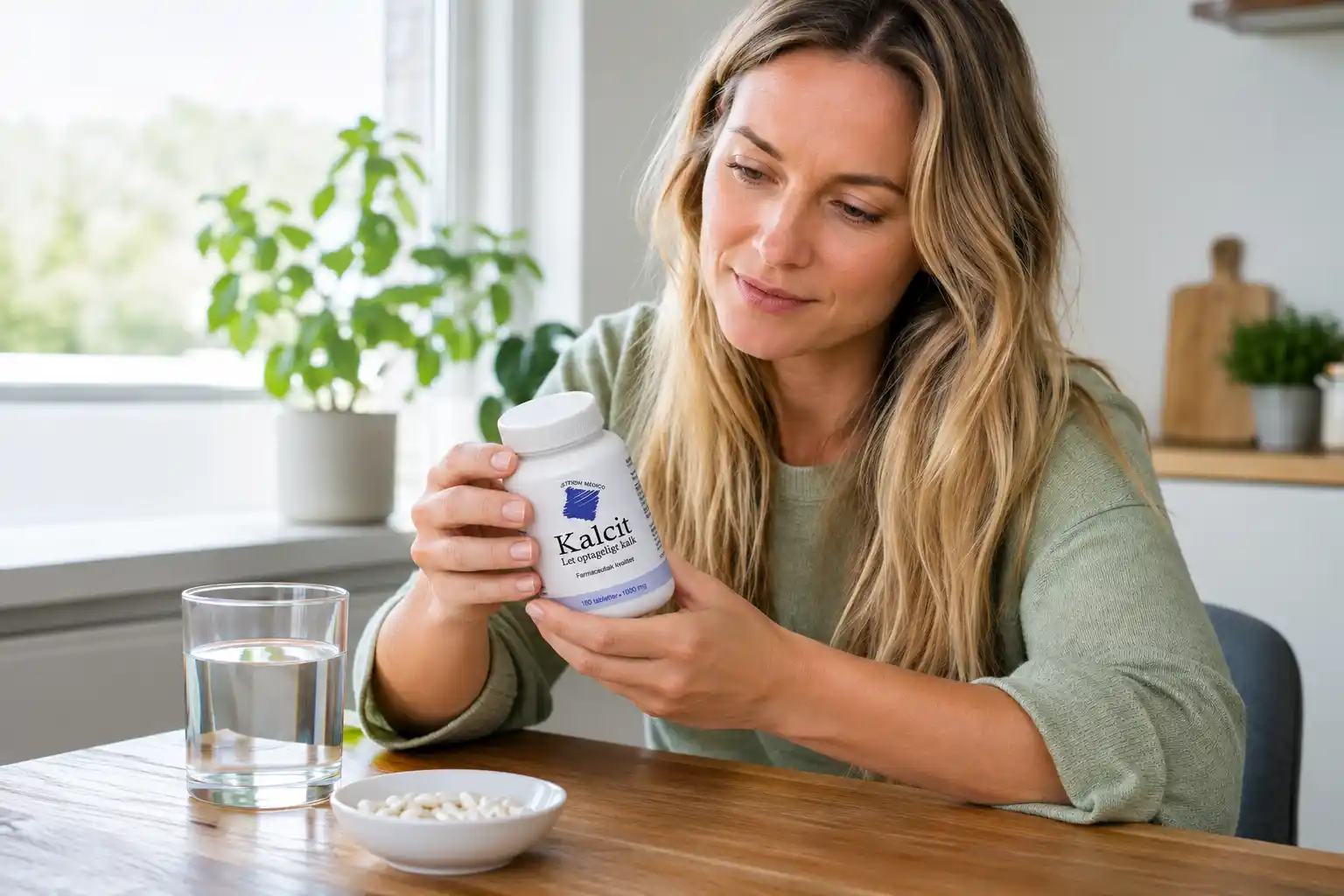


When your legs need to carry you safely, your sleep needs to be more stable, and your energy needs to last all day, choosing vitamins quickly becomes more than just a detail. This guide to vitamins for the elderly is made for those of you who want to take care of strength, mobility, and energy – without making it more complicated than necessary.
Why vitamin needs change with age
The body doesn't work quite the same way it used to. Your appetite may be reduced, you may eat more one-sidedly, and the absorption of certain nutrients often becomes worse with age. At the same time, the importance of what you actually eat increases, because small deficiencies can be more easily noticed in everyday life.
For many, it's not about chasing perfect numbers, but about maintaining freedom in the body. You feel the difference when muscles function, bones are strong, the immune system holds up, and fatigue doesn't take up too much space. That's why it makes sense to see vitamins as a practical part of active aging – not as decoration on the bathroom shelf.
This also means that there is no one answer that fits all. Your needs depend on factors such as diet, medication, appetite, sun exposure, activity level and whether you already have challenges with your bones, energy or immune system.
Guide to vitamins for the elderly – the most important things to know
To put it simply, there are some vitamins that have particularly deserved attention in recent years.
Vitamin D for bones, muscles and balance
Vitamin D is often the first place to start. It helps the body absorb calcium and plays a central role in bone strength, muscle function and, to some extent, immune function. Many older people get too little of it, especially in Denmark, where the sun does not cover the needs for much of the year.
If you spend little time outside, wear covering clothing, or your skin produces less vitamin D than before, you may a subsidy be a simple solution. It is particularly relevant if you want to support your bones and reduce the risk of becoming more unsteady on your feet. Here, vitamin D often makes the most sense together with a focus on calcium, because the two work closely together.
Vitamin B12 for energy and nervous system
Vitamin B12 is often overlooked, even though it can be very important for energy, nerve function and the formation of red blood cells. With age, absorption from the diet often becomes poorer, and this can happen even if you actually eat sensibly.
Low B12 can manifest itself as fatigue, dizziness, tingling in the hands and feet, or a feeling of being more lethargic than usual. Here, it is not always enough to simply eat more meat, fish, or dairy products if the body does not absorb the vitamin effectively. Therefore, B12 is one of the areas where a targeted supplement can be particularly relevant.
Vitamin C for immune defense and daily recovery
Vitamin C is often associated with the immune system, and rightly so. It also contributes to the normal formation of collagen, which is important for skin, blood vessels, cartilage and bones, among other things. For the older target group, it is interesting because it plays a role in several of the functions that are important for daily vitality.
Most people can get some through their diet if they eat vegetables, fruit and berries regularly. However, if you have a small appetite, a one-sided diet or periods of extra stress, a supplement can be a practical support.
Folate and other B vitamins
B vitamins rarely work alone. Folate, B6 and B12 are closely related and are relevant for, among other things, energy metabolism and normal functioning of the nervous system. If you feel drained, or your diet fluctuates a lot, a B vitamin complex may in some cases make more sense than focusing on just one vitamin.
However, it is worth choosing carefully. More is not always better, and high doses do not automatically give better effects. The most important thing is that the supplement matches a real need.
What about vitamins A, E and K?
Vitamin A is important for vision, skin and immune function, but you should be more careful with large doses. Older people in particular who already take several supplements should avoid getting too much from several products at once.
Vitamin E acts as an antioxidant, but is rarely the first vitamin you need to prioritize alone unless your diet is very limited. Vitamin K is interesting because it plays a role in bone metabolism. This is especially important if you are taking blood-thinning medication, as the interaction may require extra caution.
The short answer is that these vitamins may be relevant, but rarely as a random purchase. They should be chosen based on your overall situation.
How to choose the right one in practice
The best choice is rarely the widest product on the shelf. The best choice is what you actually need and what you can get your hands on.
If your focus is on bones and strength, vitamin D is often central and makes good sense along with calcium if you don't get enough through your diet. If your biggest problem is fatigue and low energy, B12 or a targeted B vitamin product is often more relevant to investigate. If you want support immune system and recovery, vitamin C can be a simple part of the solution.
There is also a practical side. Many older people already take medication or several different supplements. Here it is an advantage to choose simple and clear rather than collecting five or six products without a plan. Fewer, well-chosen products often lead to better compliance in everyday life.
With a specialized player like Strohmedico, the advantage is precisely that the range is built around specific needs such as bone strength, energy, sleep and mobility – not just long ingredient lists. This makes it easier to choose based on goals instead of guesswork.
When a multivitamin makes sense – and when it doesn’t
A multivitamin can be a good starting point if you eat small, irregular meals, or just want a daily safety net. It can be a simple solution, especially if you want peace of mind about the most common vitamins and minerals.
But a multivitamin doesn't solve everything. If you specifically lack vitamin D or B12, the amount in a regular multivitamin is not always enough. In this case, a more targeted supplement may be necessary. Therefore, the question is not whether a multivitamin is good or bad. The question is whether it suits your needs right now.
Signs you should take a closer look at your vitamins
It's not always obvious when your body is lacking something. The signs often come on insidiously and are easily explained away by age alone. Fatigue, decreased appetite, muscle weakness, frequent infections, slow recovery or greater insecurity in the body can have several causes, but vitamins and minerals are an obvious place to look.
This doesn't mean that every problem can be solved with a supplement. Pain, severe fatigue, or sudden changes should always be properly assessed. But when everyday life feels more burdensome than it needs to be, it makes sense to get the basics right first.
Important precautions before you start
Dietary supplements should be a help, not a lottery. If you take blood thinners, antacids, osteoporosis medication or other prescription medications, there may be interactions that you should take into account. This is especially true for vitamin K, calcium and in some cases high doses of individual vitamins.
It's also worth looking at the dosage. Many people think that high dosage automatically means high effect. It doesn't necessarily work that way. The body needs appropriate amounts over time, and stability often beats large one-time solutions.
Quality also plays a role. When choosing supplements, it gives you peace of mind to look for products with clear declarations, proper dosage, and production under controlled conditions. It's not just about what's on the label, but about trusting what you're taking every day.
The best routine is the one you can stick to.
The most effective vitamin program is rarely the most advanced. It's the one that fits into your everyday life. A supplement taken with breakfast works better than a perfect product that gets forgotten in the cupboard.
So keep it simple. Think about your most important goals: stronger bones, more energy, better resilience, or support to keep your body going as you age. Then choose a few, relevant products rather than spreading yourself too thin.
Taking vitamins as you get older isn't about chasing youth. It's about preserving what matters: stability, strength, and the freedom to do more even a little longer. It's a good place to start—and an even better place to stick with.