

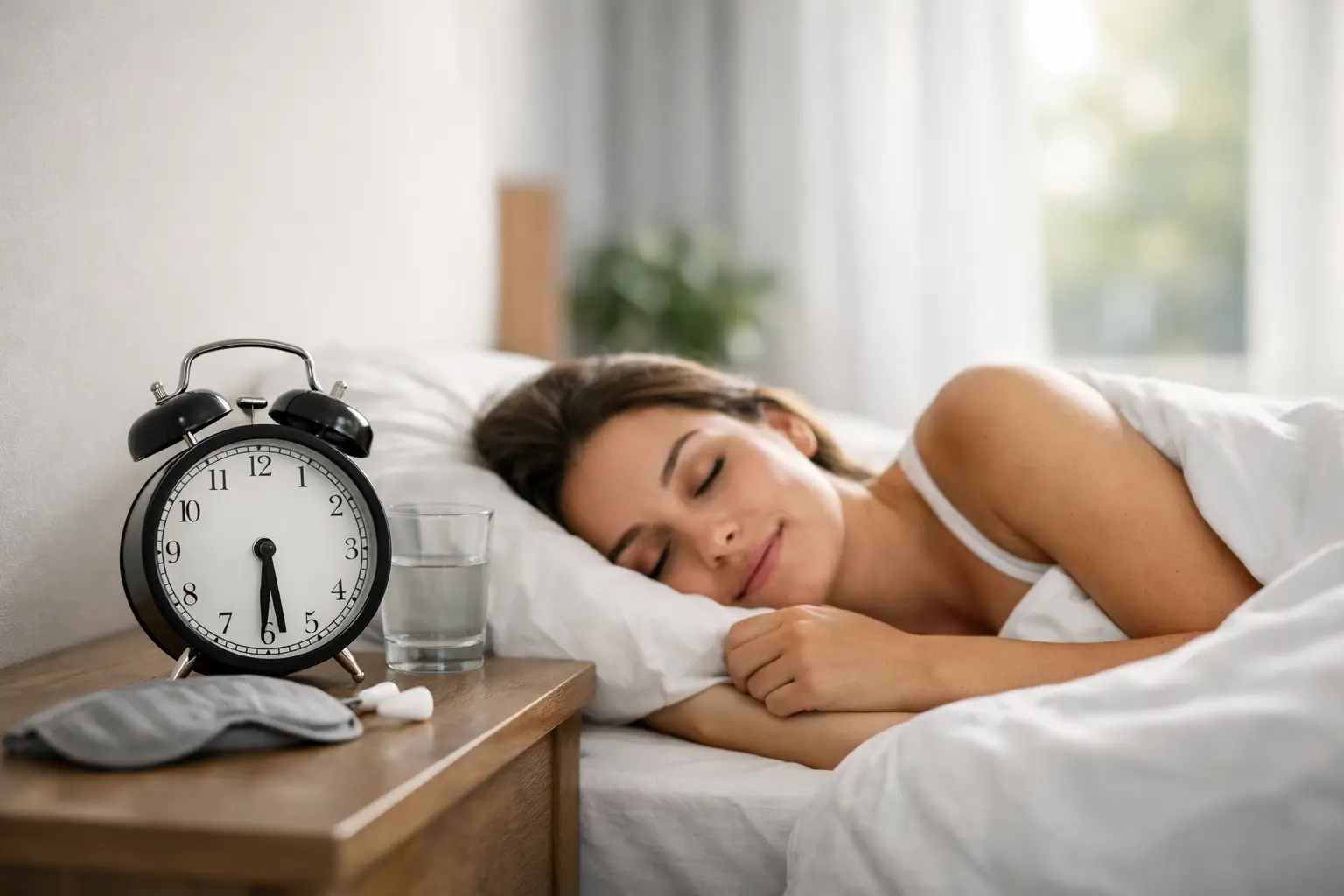
You often feel it first thing in the morning. Your body is heavy, your head is slow, and even an ordinary day feels more demanding than it should. A good guide to better sleep rhythms is therefore not just about the night. It's about your energy, your concentration, and your freedom in everyday life.
For many adults, sleep problems creep up on you. You fall asleep later, wake up earlier, wake up during the night, or don't feel rested even after many hours in bed. It's frustrating, but it's not hopeless. Sleep patterns can often improve significantly with a few, consistent changes.
Why sleep rhythm matters more with age
As we age, sleep changes. Many experience lighter sleep, more awakenings, and greater sensitivity to stress, pain, caffeine, and irregular habits. This doesn't mean that poor sleep is something you just have to accept. Quite the opposite.
A stable sleep rhythm supports recovery, mood, and daily functioning. It can also make a difference to appetite, desire to move, and the feeling of energy. If you want to maintain strength, activity, and quality of life, sleep is not a luxury. It is part of the foundation.
At the same time, there is an important caveat. If your sleep problems are caused by pain, medication, nighttime restlessness, breathing problems or frequent toilet visits, the rhythm should not stand alone. Here it makes sense to look at both the cause and the solution in context.
Guide to better sleep rhythm – start with a fixed time
The most effective place to start isn't necessarily bedtime. It's the time you get up.
Many people try to sleep late after a bad night. It feels logical, but it can throw the rhythm off course even further. If you want to teach your body when it should be tired, it needs a firm point of reference every day. This also applies to the weekend.
Choose a realistic time to wake up and stick to it for at least two weeks. Not perfect, but consistent. The body responds better to regularity than to good intentions.
If you fall asleep very late today, don't try to change everything at once. Shift your rhythm gradually, 15 to 30 minutes at a time. Making big jumps often just makes you more restless.
Morning light is not a small piece of advice
Light in the morning is one of the strongest signals to your circadian rhythm. Go outside soon after you wake up, even if the weather is gray. Daylight helps your brain understand that the day has begun, which makes it easier to naturally fall asleep in the evening.
Just 15 to 30 minutes can be enough as a regular habit. If you combine it with a short walk, you will get exercise at the same time, which also benefits sleep.
What you do in the evening often determines the night
Many people think of sleep as something that starts when their head hits the pillow. In practice, it starts several hours before.
The evening should be a smooth transition from activity to rest. If you work late, see bright lights from screens, eat heavily, or keep your body on high alert with news, conflicts, or practical tasks, the transition to sleep will be harder.
This doesn't mean you have to live a strict or boring life. But you have to help your body understand that the pace is slowing down.
Create a simple evening routine that you can stick to. It could be a light evening meal, dimmed lights, quiet music, a bath, reading, or a few regular minutes without your phone. The important thing is not that the routine is sophisticated. The important thing is that it is repetitive.
Be careful with late-night coffee and alcohol
Caffeine affects many people for longer than they think. If you struggle with falling asleep or having restless sleep, it's worth testing whether coffee, tea or cola late in the day is playing a role. Some people can tolerate a cup in the afternoon, others can't. Here it's better to be honest than optimistic.
Alcohol can make you drowsy, but it often leads to poorer sleep quality later in the night. Many people experience more awakenings and less deep sleep. If you want a more stable rhythm, it's worth cutting back on alcohol close to bedtime.
The bed should be associated with sleep, not struggle.
A classic problem is lying awake for a long time and trying to force sleep. This often does the opposite. The brain begins to associate the bed with frustration and restlessness.
If you don't fall asleep after a reasonable amount of time, or if you wake up and lie awake for a long time, it can help to get up briefly. Sit somewhere else in dim light and do something quiet until you feel tired again. No cleaning, no mobile phone scrolling and no fast-paced television.
It may seem annoying in the moment, but for many it breaks a bad habit. The goal is to rebuild a simple connection between bed and sleep.
Movement helps – but timing matters
The body often sleeps better when it has been used during the day. Regular exercise can improve both the length and quality of sleep, especially if you are otherwise very sedentary.
It doesn't have to be hard exercise. Walking, cycling, light strength training or regular activity at home can make a real difference. For many in adulthood, it's precisely the regular, manageable habits that work best in the long run.
If you exercise very late and find that you are more alert afterwards, move the activity earlier. It depends on the person, but timing plays a role.
When the body lacks rest, support can be relevant
Sometimes good habits alone are not enough. If your sleep has become unstable over time, or if you have difficulty falling asleep at a set time, it may be relevant to look at targeted support as part of your routine.
Here, many choose a sleep product that fits into everyday life and is easy to use consistently. The crucial thing is that it does not become a replacement for rhythm, but a tool to support it. The best effect often comes when fixed times, quiet in the evening and a relevant product work together.
At Strohmedico, sleep is not seen as a stand-alone problem, but as an important part of maintaining energy, vitality and function in everyday life. This is also why many people seek solutions that are simple, proven and easy to stick to.
Guide to better sleep rhythm when waking up at night
It's one thing to fall asleep. It's another to stay asleep. Many adults wake up between 2 and 4 a.m. and have difficulty getting back to sleep.
Here it is important not to immediately turn the night into a project. Don't turn on bright lights, start eating or get on the phone. Give your body a real chance to recover.
If the awakenings are related to heat, pain, thirst, or toileting, adjust the practicalities. A cooler bedroom, less fluid just before bed, or better management of physical discomfort may do more than just another hour in bed.
If your mind is racing, trying to think yourself to sleep is rarely helpful. A simple, repetitive strategy works better, such as calm breathing or focusing on physical relaxation. The less dramatic you make the awakening, the easier it is often to deal with.
When you should react faster
If you have had sleep problems for a long time, and they affect mood, memory, balance, appetite or daily energy, it is worth taking seriously. The same applies if you snore heavily, wake up with shortness of breath, have noticeable restless legs or feel exhausted despite many hours in bed.
There is no one-size-fits-all solution. Some people need more structure. Others need to look at pain, medication, or more targeted sleep support. The right path is the one you can actually follow week after week.
Make sleep something you protect
Many people are conscientious about their medication, diet, and exercise, but still treat sleep as something that must be taken care of on its own. It's an expensive habit. Without good sleep, it becomes harder to maintain energy, movement, and energy levels.
Start simple. Get up at the same time. Get light in the morning. Slow down in the evening. Give your body the same signals every day. Small, stable changes often works better than big plans that fall apart after three days.
The best sleep rhythm is not the perfect one. It's the one that gives you more rest at night and more energy during the day.